FROM COMMUTE TO PLAY: A SPATIAL USER EXPERIENCE
An experiential photo booth that turns familiar commute to a vibrant, shareable moment.
ROLES: UX Design, Spatial, Art Direction,
DURATION: 2.5 Weeks
PROJECT OVERVIEW This project reimagines a familiar Singapore train carriage as an interactive photo booth that invites visitors to move, play, and co-create moments together.
Rather than designing a static backdrop, the goal was to craft a spatial experience shaped around user behaviour — how people enter a space, how they choose props, where they feel comfortable standing or sitting, and how they naturally pose with others.
The result is an immersive environment that feels instantly recognisable, yet joyfully unexpected. A place where everyday commuting cues become prompts for creativity, connection, and play.
OUTCOME & IMPACT
The final installation successfully transformed a familiar setting into an engaging, interactive photo experience. Visitors intuitively understood how to interact with the space, spent time exploring different poses, and treated the booth as both a photo backdrop and a playful environment.
The project demonstrates how thoughtful spatial design, combined with strong visual storytelling, can elevate a brand experience beyond static visuals.
How might we turn a familiar public space into an engaging, interactive photo experience?
The key challenge was designing a physical environment that:
Feels immediately recognisable and intuitive to step into
Encourages exploration and playful interaction without instruction
Supports comfort, accessibility, and natural movement for groups
Balances brand identity with a sense of fun and discovery
Because this was a physical installation, every design decision—from seat height to pole spacing — directly affected how visitors moved, posed, and interacted within the space.
CHALLENGE
UNDERSTANDING USER JOURNEY
Before designing the booth, I mapped out how visitors would naturally move through the experience:
-
01
Approach & Curiosity
What draws them in visually?
-
02
Discovery
How do they understand what to do without a guide?
-
03
Interaction
How do props, seating, and space invite play?
-
04
Capture
How do people pose, move, and interact with others?
-
05
Collection
How and where do they proceed to collect their photos?
-
06
Exit & Share
How does the experience linger beyond the photo?
DESIGNING THE SPACE AROUND PEOPLE
Designing for comfort, flow, and play
The photo booth was designed as a walk-in environment rather than a static backdrop.
Seat height and width were carefully considered to allow both sitting and standing poses, accommodating individuals and small groups comfortably.
Pole placement and spacing were tested to ensure visitors could hold, lean, and pose naturally — mirroring real train behaviour without feeling restrictive.
Clear circulation paths allowed people to step in, move around, and reposition themselves without congestion.
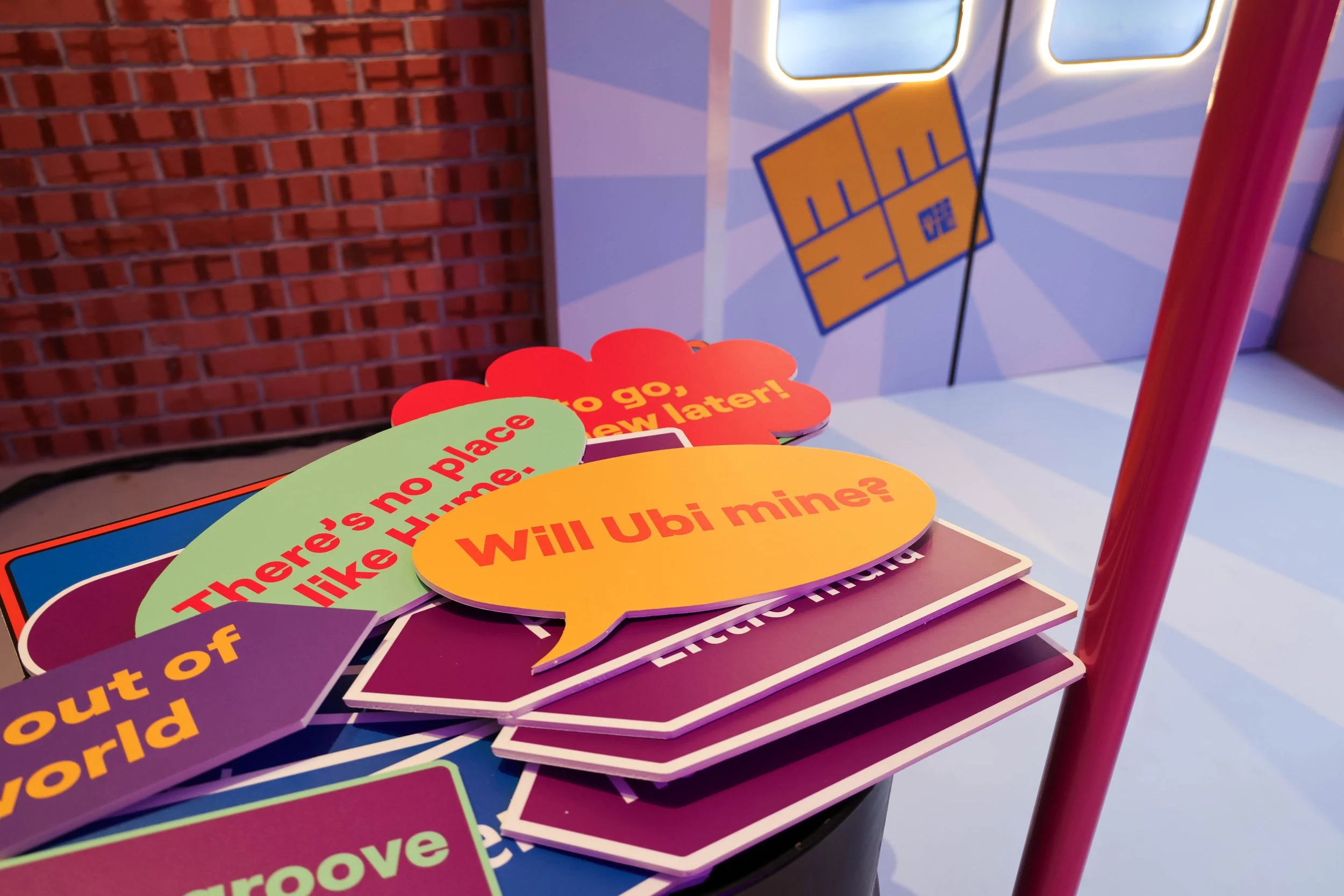
Props were placed within easy reach, encouraging spontaneous interaction and playful experimentation.
Every element was positioned to reduce hesitation and invite participants to have fun and enjoy the photo-taking process.
VISUAL LANGUAGE & BRAND EXPRESSION
Familiar, but playful
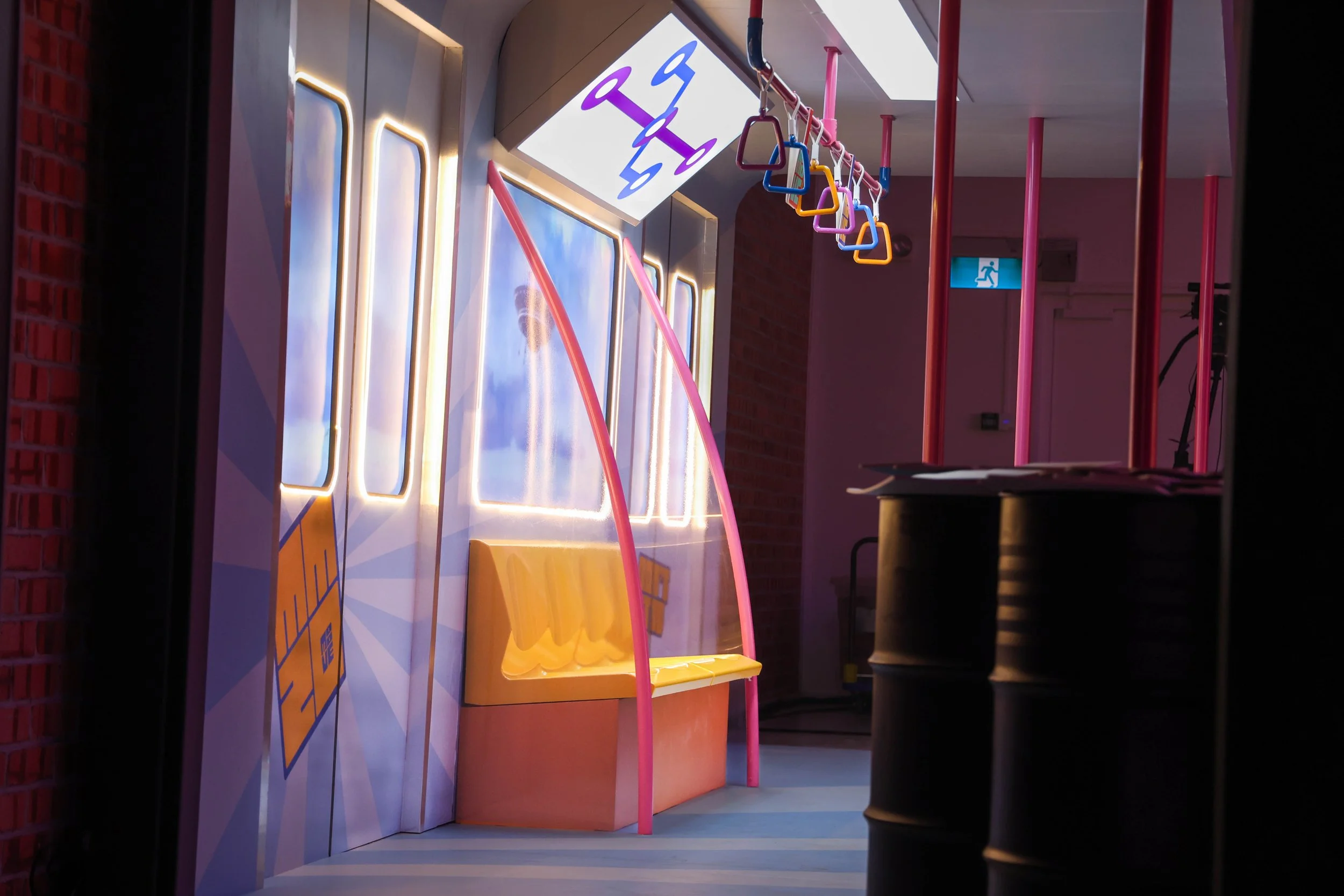
The installation draws from the visual language of Singapore’s MRT interiors —windows, seats, hand grips, and signage — while exaggerating proportions and colour to create a whimsical tone.
Brand colours were applied consistently across walls, props, and signage to maintain strong visual identity.
Custom typography and graphics added humour and personality without overwhelming the space.
Playful train signage that feels lighthearted, not corporate, anchored the experience in a shared local memory, making it instantly relatable.
Exaggerated graphic background that adds personality
This balance helped the space feel both authentic and imaginative.
LIGHTING & ATMOSPHERE
Setting the mood for photos
Lighting played a key role in shaping the experience:
Lightboxes were used for maps and signage, acting as both functional lighting and add more dimensional to the backdrop.
Roof lighting and window illumination ensured the booth was evenly lit from all angles — crucial for photography.
The overall lighting design brightened the space while enhancing colour vibrancy, ensuring photos looked lively and flattering.
The result was a booth that felt welcoming, energetic, and camera-ready.
THE EXPERIENCE IN ACTION
Once inside, visitors naturally progressed through the space:
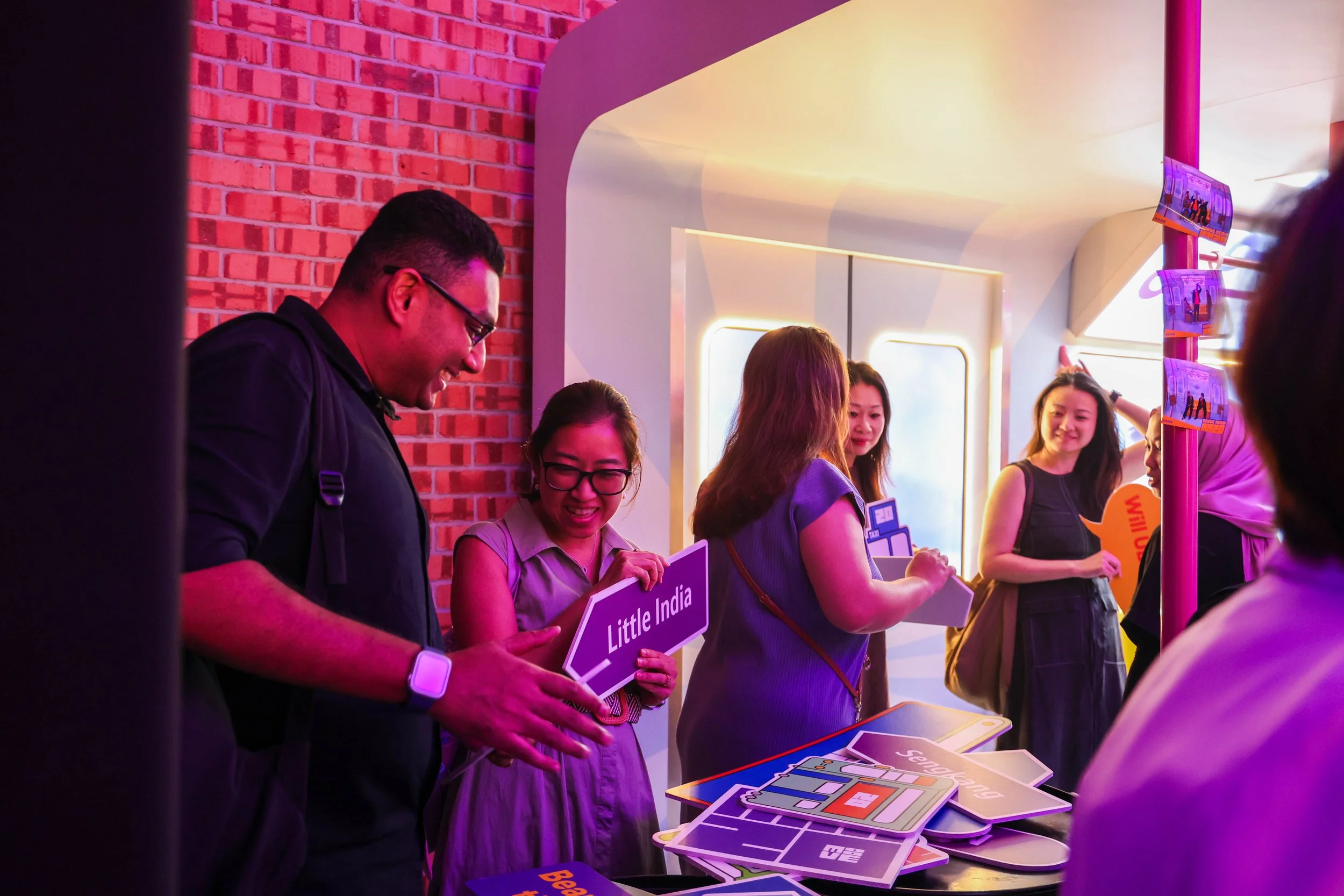
Selecting props
Taking seats or standing positions
Experimenting with poses
Interacting with friends and strangers alike
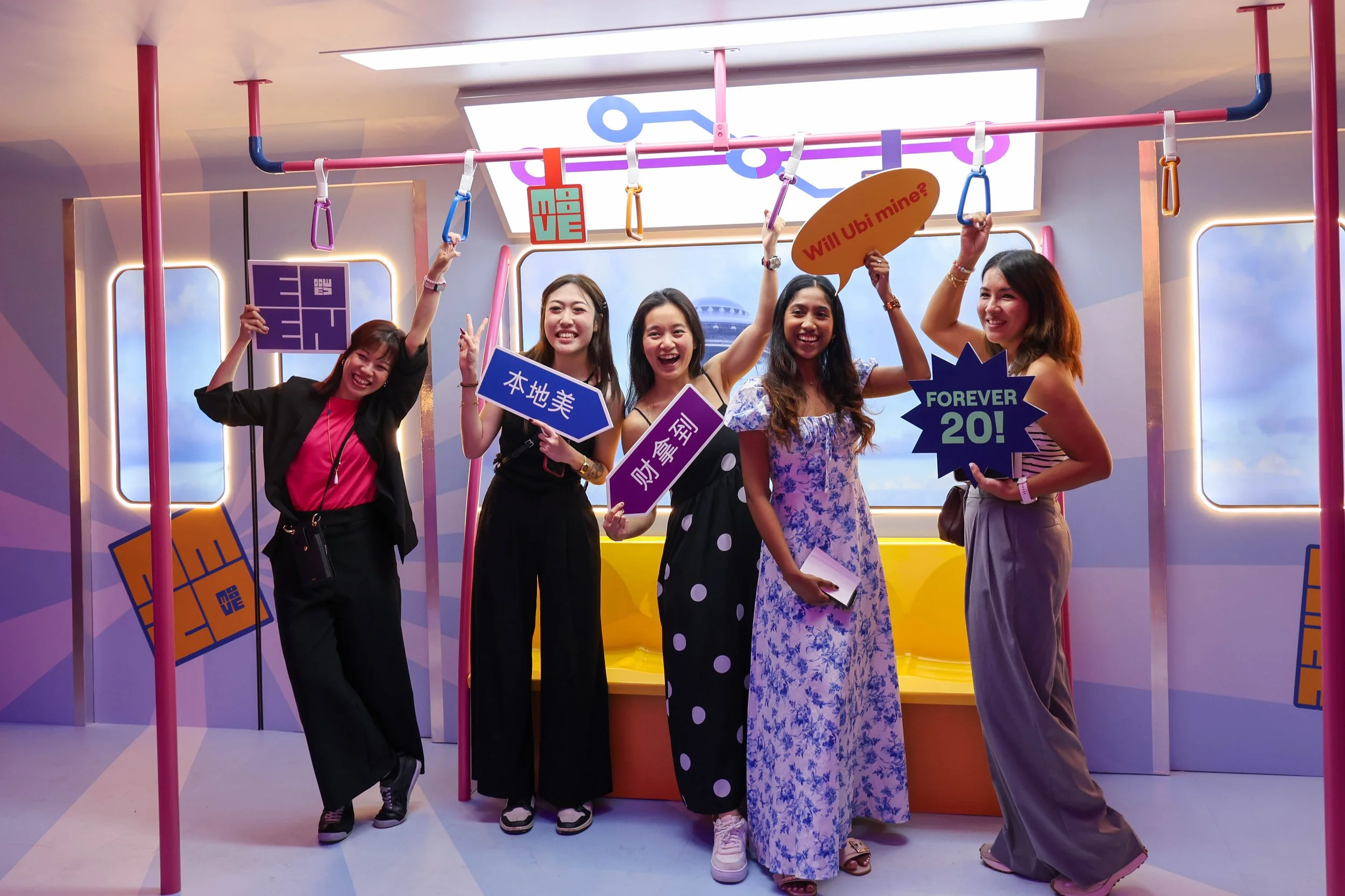
The environment supported both posed shots and candid moments, encouraging laughter, movement, and social interactions.
PHOTOBOOTH WALKTHROUGH
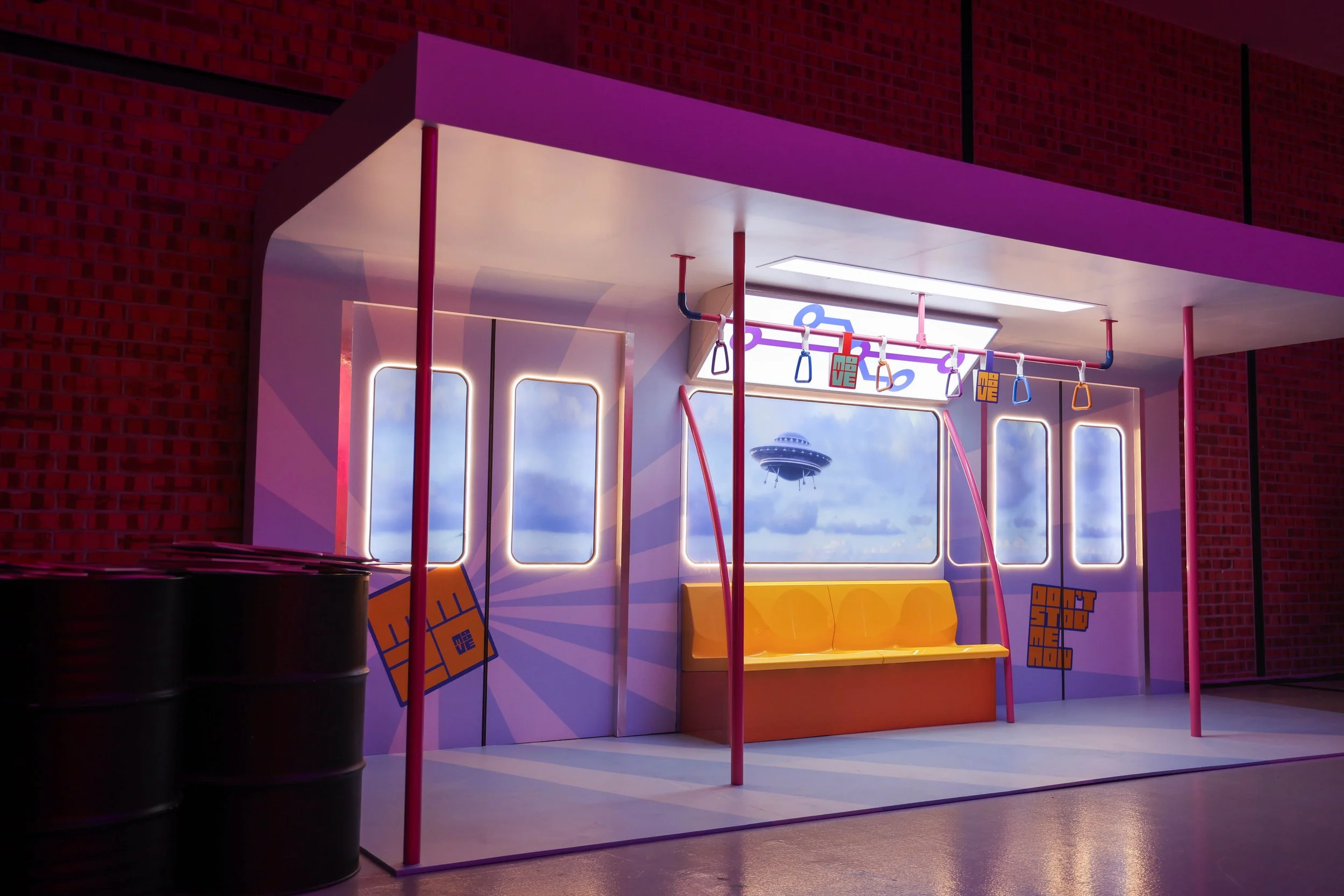
Before stepping in, visitors selected playful speech-bubble props that acted as storytelling prompts. Inside, thoughtfully placed poles, straps, and seating encouraged natural interaction, spontaneous poses, and shared moments of play.
Their height and spacing were considered to ensure comfort and accessibility, allowing visitors to naturally lean, sit, hold, and pose while creating their own spontaneous and humorous scenarios.

Beyond the overall layout, I paid close attention to the smaller material details that shape how the space feels and functions.
Silver window trimmings were introduced to subtly echo the look of real Singapore train carriages, grounding the booth in familiarity.
The placement of the vertical poles was carefully calibrated. Not only to be intuitive and usable for posing, but also to visually support the roof structure.
Curved forms appear throughout the booth, connecting walls to the roof and replacing rigid angles with a softer, more welcoming feel.
OUTCOMES
The final installation successfully transformed a familiar setting into an engaging, interactive photo experience. Visitors intuitively understood how to interact with the space, spent time exploring different poses, and treated the booth as both a photo backdrop and a playful environment.
The project demonstrates how thoughtful spatial design, combined with strong visual storytelling, can elevate a brand experience beyond static visuals.
REFLECTION AND TAKEAWAYS
This project deepened my understanding of how UX principles translate beyond screens into physical space. I learned that great experiences are shaped not just by visuals, but by how people move, feel, and interact within the environment. By designing around human behaviour, rather than expecting people to adapt to the design, I was able to create a space that felt intuitive, joyful, and truly immersive.