REFRESH YOUR IMAGINATION
A Pepsi campaign that brings imagination and creativity to life.

CLIENT: PepsiCo Singapore
ROLES: Visual Designer, Illustrator, Art Direction
DESIGN BRIEF
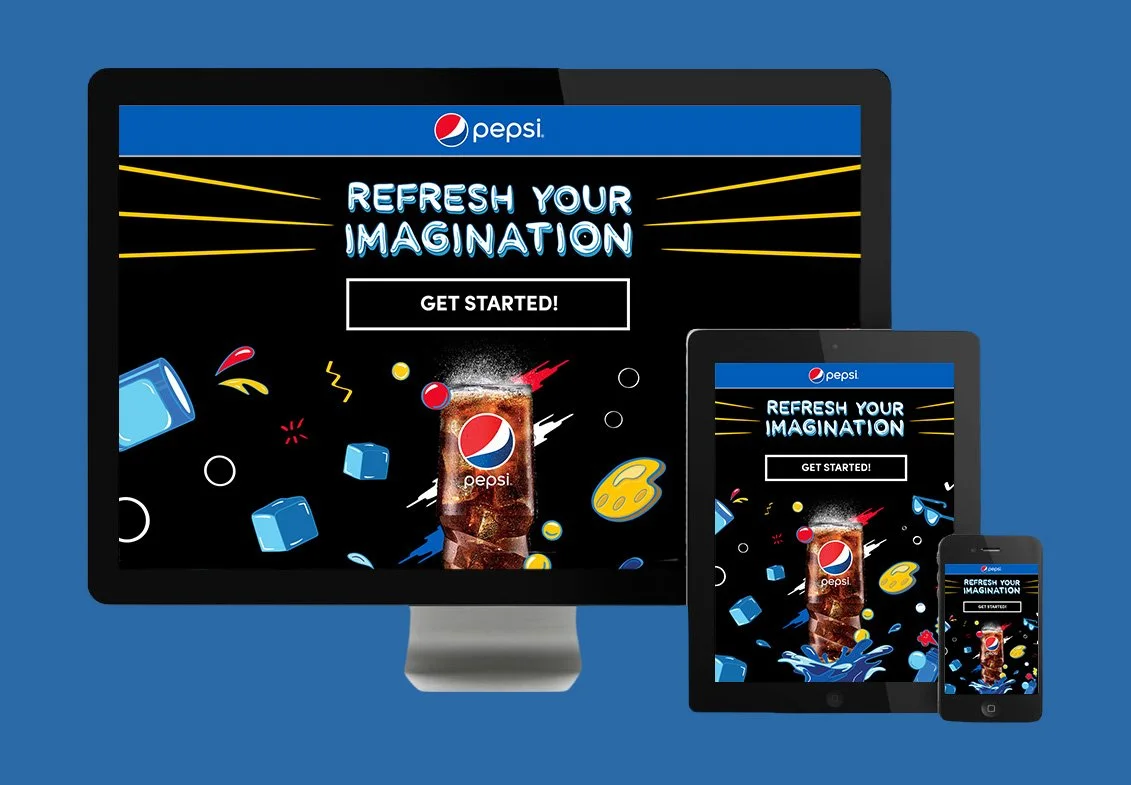
Refresh Your Imagination was a digital campaign for Pepsi designed to invite users to express creativity through play. The experience encouraged users to create their own digital artwork for a chance to win prizes, using an interactive canvas integrated across public installations and a responsive microsite.
The campaign aimed to turn a static brand moment into an active, participatory experience.
MY ROLE
Art Direction · Key Visual Design · UX & UI Design
I led the visual concept and interaction design, focusing on:
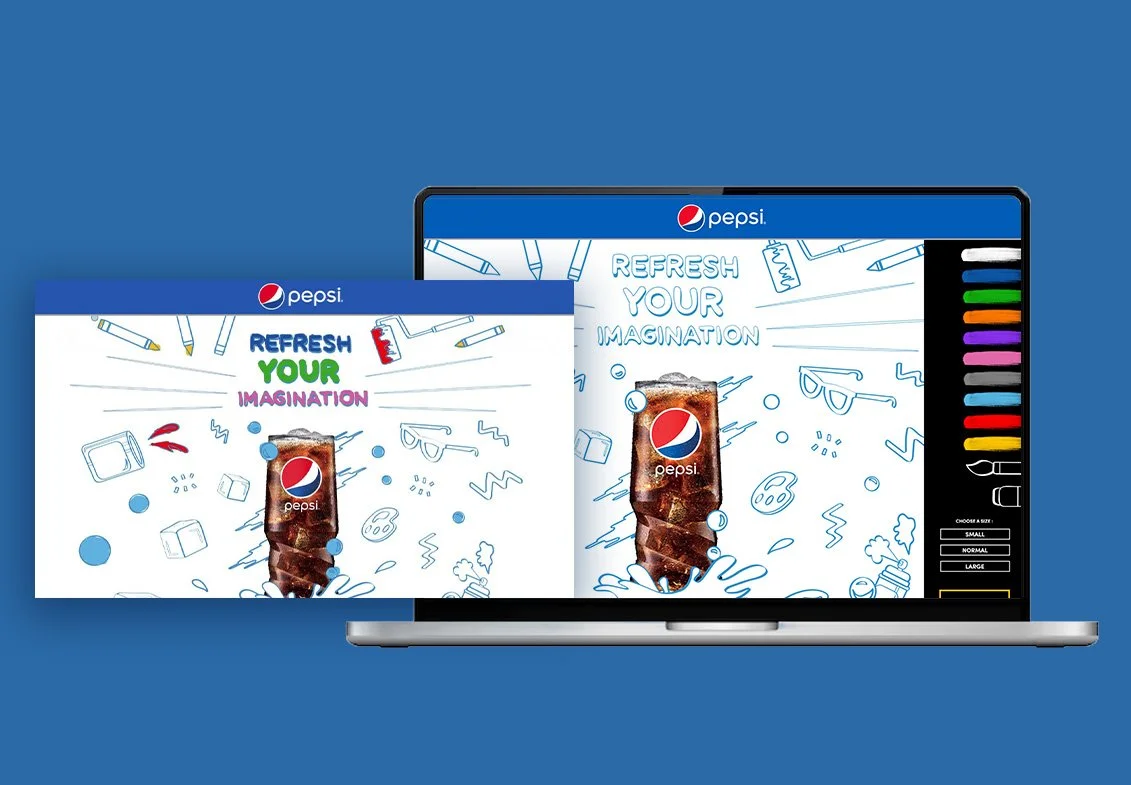
Designing the key visual that doubled as both campaign artwork and interactive canvas
Defining the visual language that supported creative expression while staying true to Pepsi’s brand
Designing the microsite experience, allowing users to create, interact, and submit their artwork effortlessly
Collaborated closely with developers throughout the design process to align on layout structure, interaction patterns, and responsive behaviour. Together, we iterated on usability details to ensure the microsite translated smoothly from design to implementation across different screen sizes.
CHALLENGES
The key challenge was designing an interface that could support creative expression while remaining intuitive across different devices and screen sizes.
The microsite needed to:
Combine drawing tools and canvas without overwhelming users
Remain easy to navigate for first-time participants
Stay visually consistent with Pepsi’s brand while encouraging playful creativity
SOLUTION
Rather than treating the interface as a traditional toolset, the solution reframed it as a creative playground. The canvas became the focal point, supported by a minimal set of drawing tools designed to feel approachable rather than technical.
The experience was built responsively to transition effortlessly between public installations and personal devices, preserving ease of use across varying screen sizes. Pepsi’s bold visual language anchored the design, while dynamic and open-ended elements invited users to add their own interpretation.
This approach allowed creativity to lead, without sacrificing clarity, usability, or brand consistency.
ART DIRECTION
Creating the key visual from scratch, guided by the tagline “Refresh Your Imagination.”
The art direction focused on:
Dynamic motion and energy to reflect creativity in action
A vibrant colour palette rooted in Pepsi’s brand guidelines, enhanced with brighter accent colours
Playful graphic elements that visually supported the idea of imagination bursting to life
Explored visual metaphors around refreshment, imagination, and energy, using dynamic splashes, playful linework, and floating elements to suggest motion and possibility. These elements were deliberately left incomplete, inviting users to add their own marks and interpretation.
The colour palette combined Pepsi’s brand colours with brighter accent tones to create a refreshing, high-energy feel that remained unmistakably on-brand.
DESIGN EXPLORATION & CONSIDERATIONS
The creative process involved:
Mind mapping and visual exploration around the concept of imagination, playfulness and the freedom to be an ‘artist’
Iterative sketching and refinement of key visual elements
Testing compositions to ensure clarity across different screen sizes and physical installations
Multiple drafts were explored before arriving at a final visual that balanced creativity, brand consistency, and usability. Design considerations included:
Keeping the interface simple and intuitive so users could start drawing immediately
Ensuring drawing tools were easily discoverable without overwhelming the canvas
The final experience allowed users to create artwork, preview their submission, and submit their entry seamlessly.
The overall flow of the microsite follows a clear, task-oriented structure: create, submit, and participate. Users are first guided into a full-screen creative canvas where they can customise their artwork using intuitive drawing tools. After completing their design, they move directly into a streamlined submission step, reducing unnecessary interruptions or context switching. This clear progression helps users complete the experience efficiently while maintaining engagement throughout the campaign journey.
SCREEN WALKTHROUGH
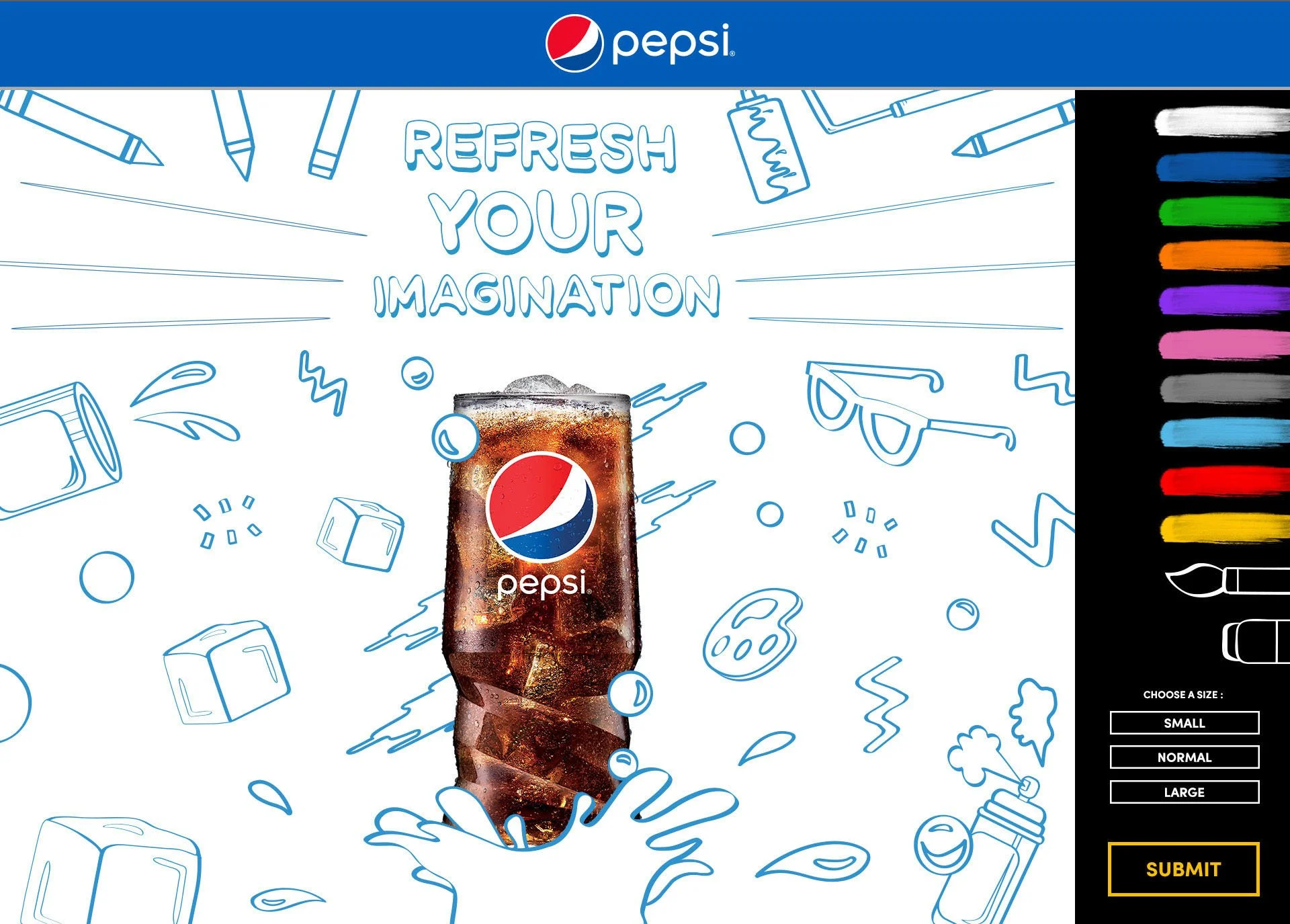
The primary challenge on this screen was balancing a large, expressive canvas with easy access to drawing tools. To encourage freeform creativity, the canvas was prioritised as the dominant visual area, giving users ample space to draw and colour comfortably.
After discussing layout constraints with the developer and testing different configurations, we placed the drawing tools persistently along the side of the canvas. This allowed tools such as brushes, colours, and erasers to remain visible and accessible at all times, reducing the need for users to switch views or navigate between states.
By keeping the tools in view without overlaying the canvas, the interface supports uninterrupted creative flow while maintaining clarity and ease of use.
INTERACTIVE CANVAS PAGE
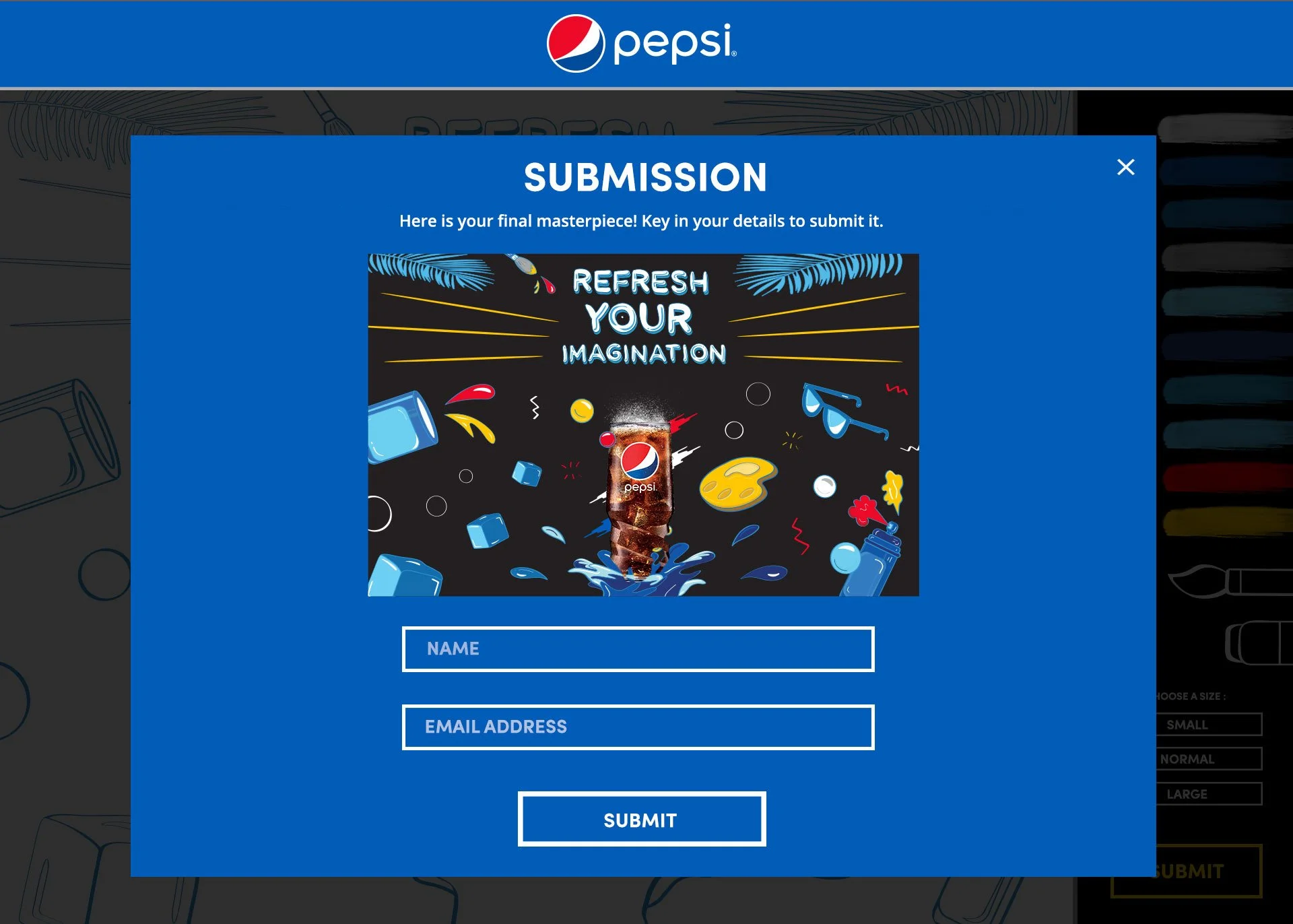
This final submission moment brings the creative experience full circle — transforming a playful act of creation into a tangible campaign entry. The submission step was designed as a focused, low-friction modal that allows users to complete their entry without leaving the creative canvas. The finished artwork is displayed clearly to provide reassurance and confirmation before submission, while the form is limited to essential fields only. This approach reduces cognitive load, prevents unnecessary drop-offs, and helps users complete the experience confidently.
SUBMISSION PAGE
REFLECTION AND TAKEAWAYS
Beyond the final visuals and microsite, this project offered valuable lessons on designing interactive brand experiences that balance creativity, usability, and technical constraints. Working across visual design, UX, and development highlighted how small interface decisions can significantly shape user confidence, creative flow, and overall participation in a campaign setting.
• Collaboration with developers shapes decisions
Close collaboration with developers influenced several layout and interaction decisions, particularly around tool placement and responsiveness. Testing different configurations together helped balance technical feasibility with usability, resulting in a more stable and intuitive creative experience across devices.
• The canvas is the product, not the tools
This project reinforced that the canvas itself was the primary experience. Design decisions — including tool placement, layout hierarchy, and screen real estate — were made to maximise space for creation while keeping tools visible and immediately accessible.