SANTA CLAUS RALLY ON THE MOVE
How a financial market concept became a city-wide festive installation.
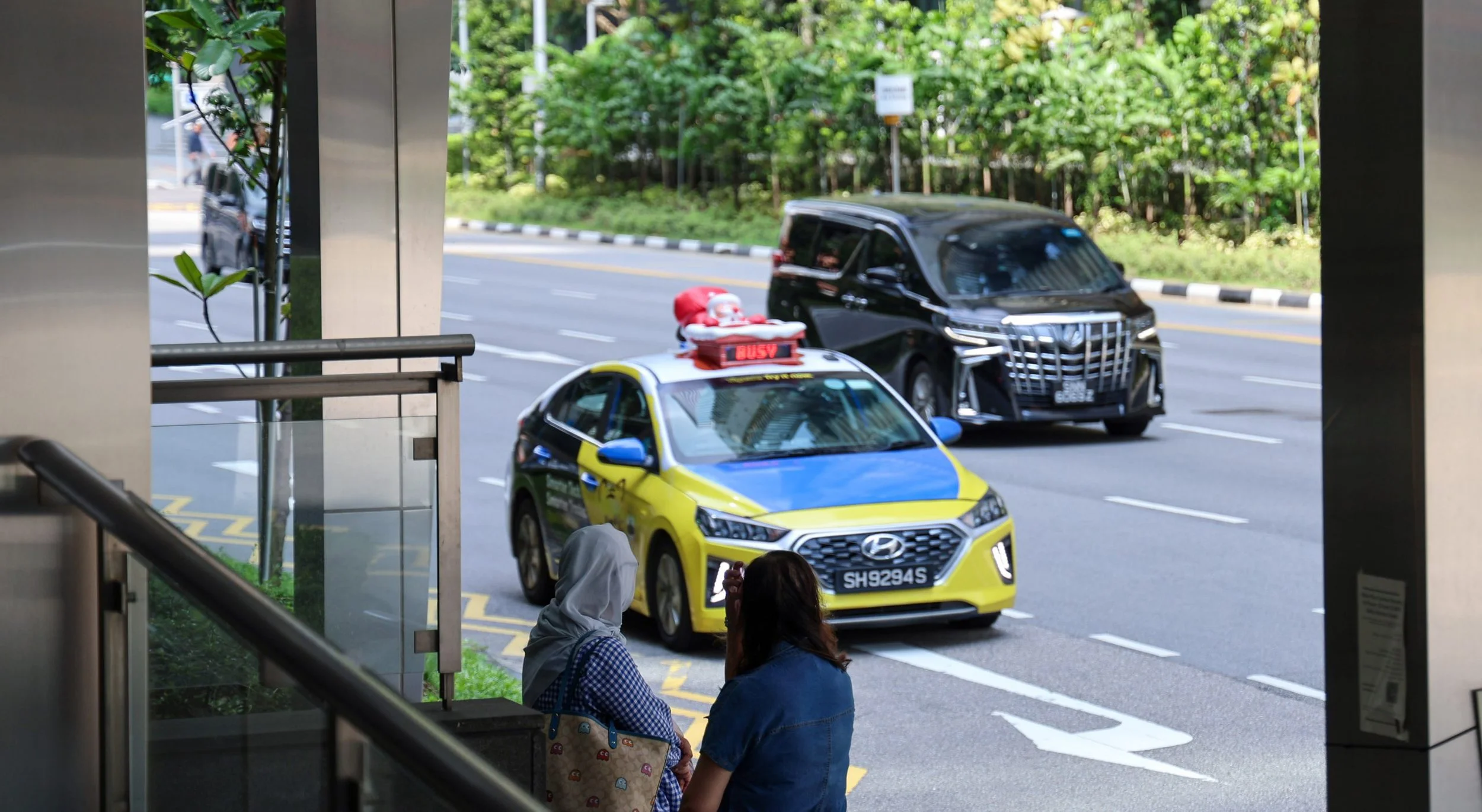
Make an abstract investment concept feel impossible to ignore on Singapore's streets.
The "Santa Claus Rally" is a genuine financial phenomenon — a pattern where stock markets tend to rise in the final weeks of December. Tiger Brokers wanted to own it. To plant their flag on a moment that was already culturally loaded, and make it unmistakably theirs.
How do you translate something as intangible as market sentiment into something a commuter understands in a split second — and remembers for weeks? The answer wasn't a poster. It wasn't a digital screen. It was putting Santa Claus literally in motion, across the city, on top of taxis and making the taxi itself part of the story.
The conceptual breakthrough happened the moment we stopped thinking about taxis as advertising surfaces and started thinking about them as objects in the world.
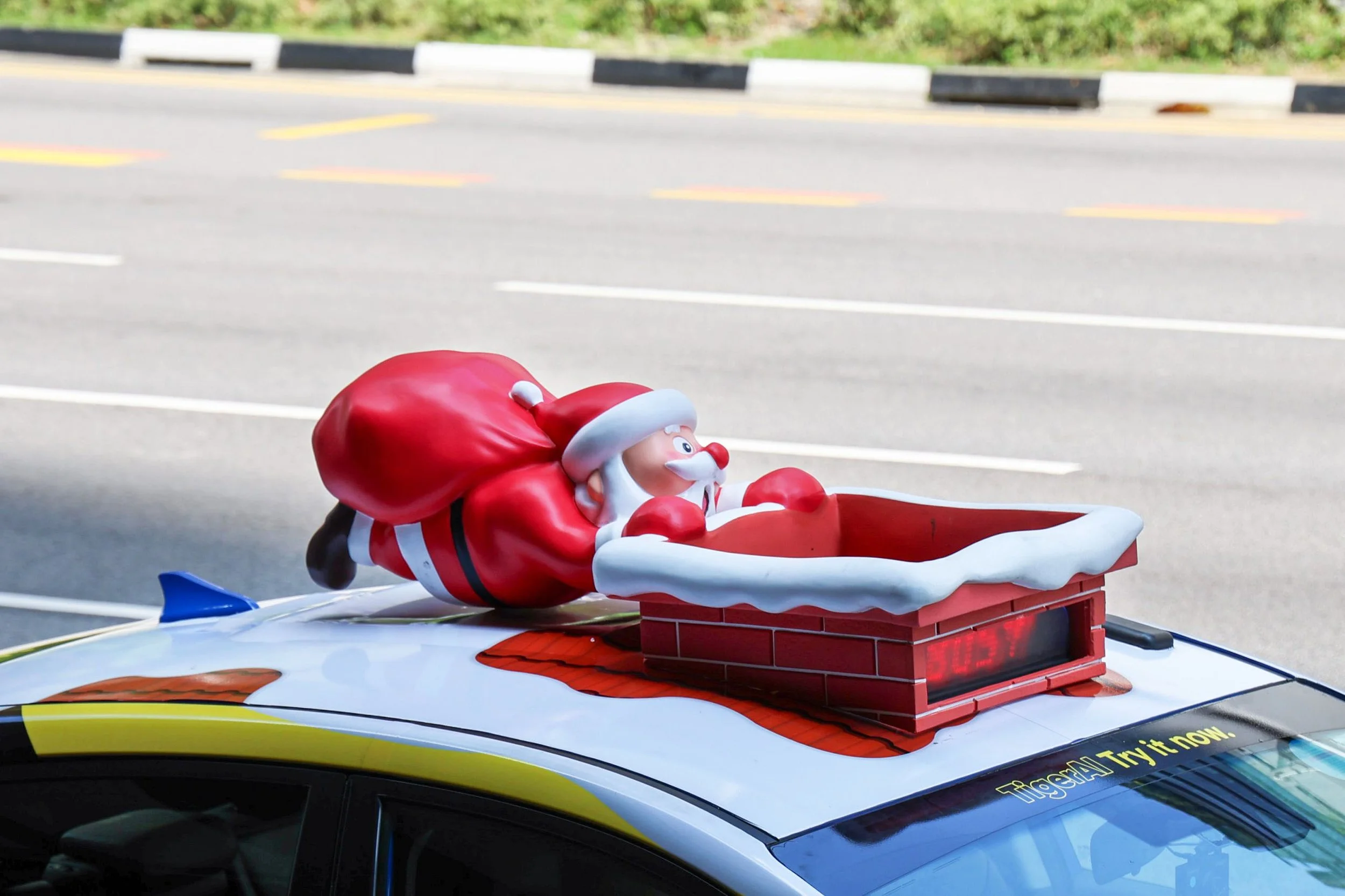
Every taxi in Singapore has a rooftop service light — a rectangular housing unit that sits right at the centre of the roof. We looked at it and saw something else entirely: a chimney stack. If we mounted a 3D Santa figure onto the taxi, gripping that light housing as though it were a chimney, he wouldn't look like he was advertising on a cab. He'd look like he was riding one.
That single reframe changed everything. The taxi wasn't a billboard anymore. It was a sleigh. Singapore wasn't a market anymore. It was Santa's route. And the financial rally wasn't a concept you had to explain — it was something happening, visibly, on the road in front of you.
The most powerful communication ideas don't describe a feeling. They create one. This was the moment we knew we had our idea.
THE CONCEPT
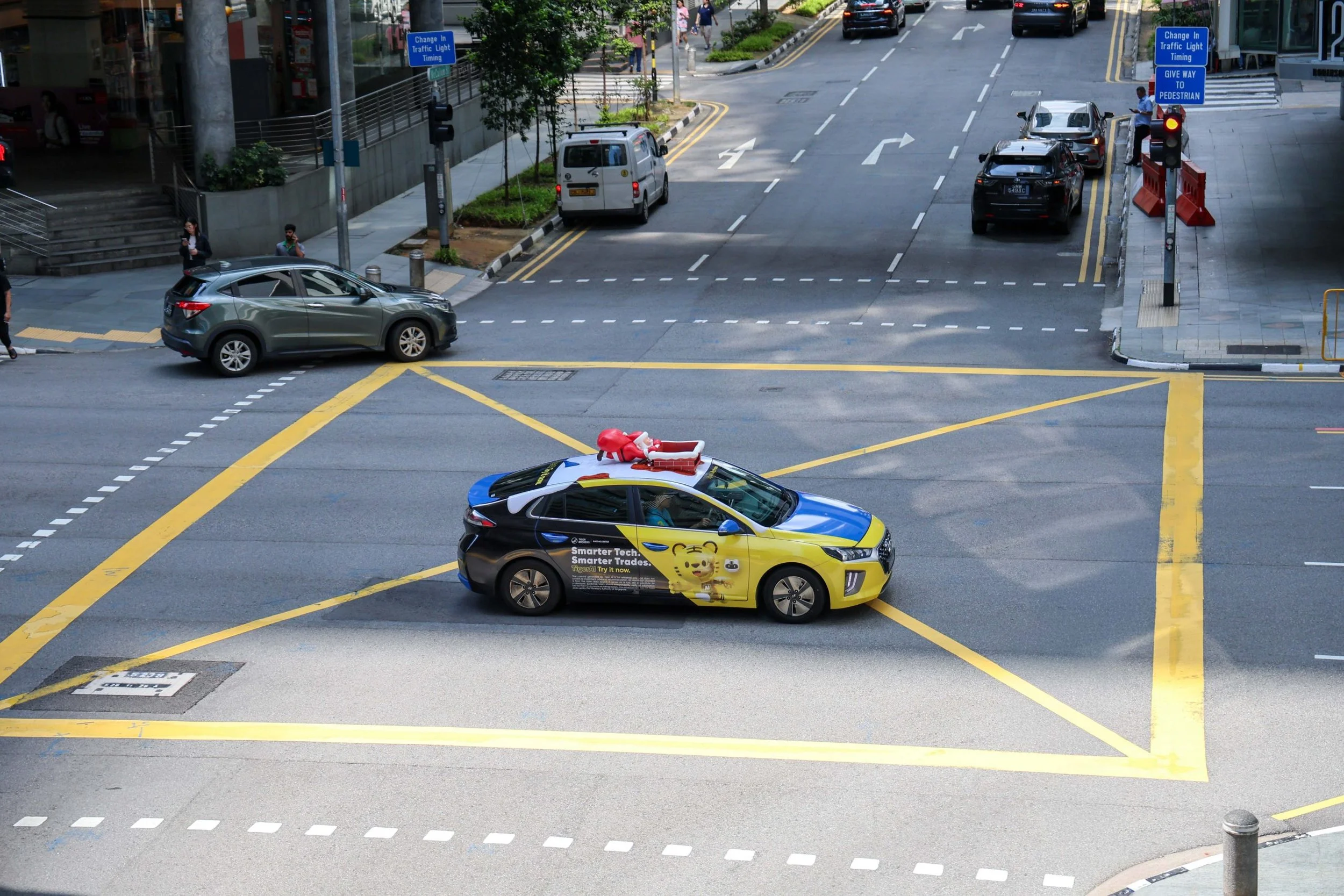
“The taxi's service light was already there. We just had to see it as a chimney first.”
CONCEPT EXPLORATION
Santa communicates: festivity, movement, generosity, the end of the year.
He's one of the most pre-loaded symbols in human culture. That means he doesn't need to be explained. He doesn't need copy. He doesn't need context. He arrives pre-understood.
If the campaign could attach Tiger Brokers to Santa — not through a poster or a tagline, but through an experience that felt genuinely surprising, the brand would borrow all of that cultural equity instantly.
What looks effortless at road speed took months of physical prototyping, regulatory negotiation, and hands-on refinement. Every phase answered specific questions before committing to the next level of investment.
Defining Santa before building Santa
Before a single prototype was made, the character had to be defined. What pose would read best at 60 km/h? What expression? Dozens of variations were explored — a waving Santa, a laughing Santa, one mid-slide with wide eyes, one triumphantly holding on.
Each was evaluated against one question: does this land in under two seconds? Expression, body form, arm position, the angle of lean — all interrogated against the constraints of moving media perception. An earlier campaign iteration (Pandora) let us test the core chimney concept in a low-stakes 2D flat format before committing to 3D production.
THE PROCESS
Starting with a Story: What Kind of Santa Should This Be?
The design process began not with the structure, but with the storytelling.
Before sketching the form, I explored how Santa has traditionally been portrayed across movies, books, and festive media. Across these references, one recurring imagery stood out — Santa carrying a sack of gifts and entering homes through chimneys.
That became the narrative anchor of the concept.
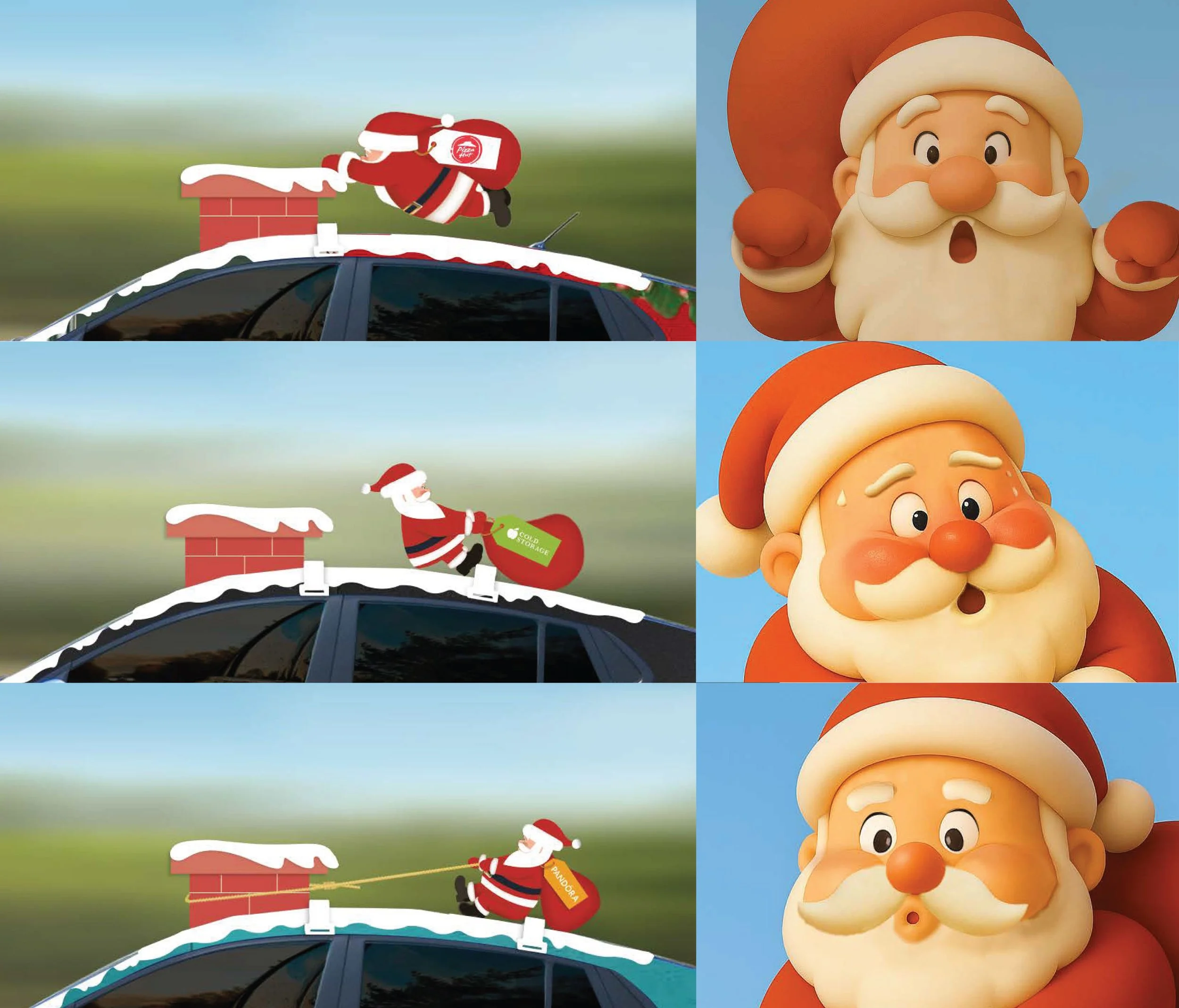
Instead of designing a “waving Santa” commonly seen in festive displays, I wanted to create a moment frozen in action — almost like a scene captured mid-flight. From there, I developed three storytelling directions, each exploring a different interaction between Santa and the chimney.
Pose Exploration & Storytelling
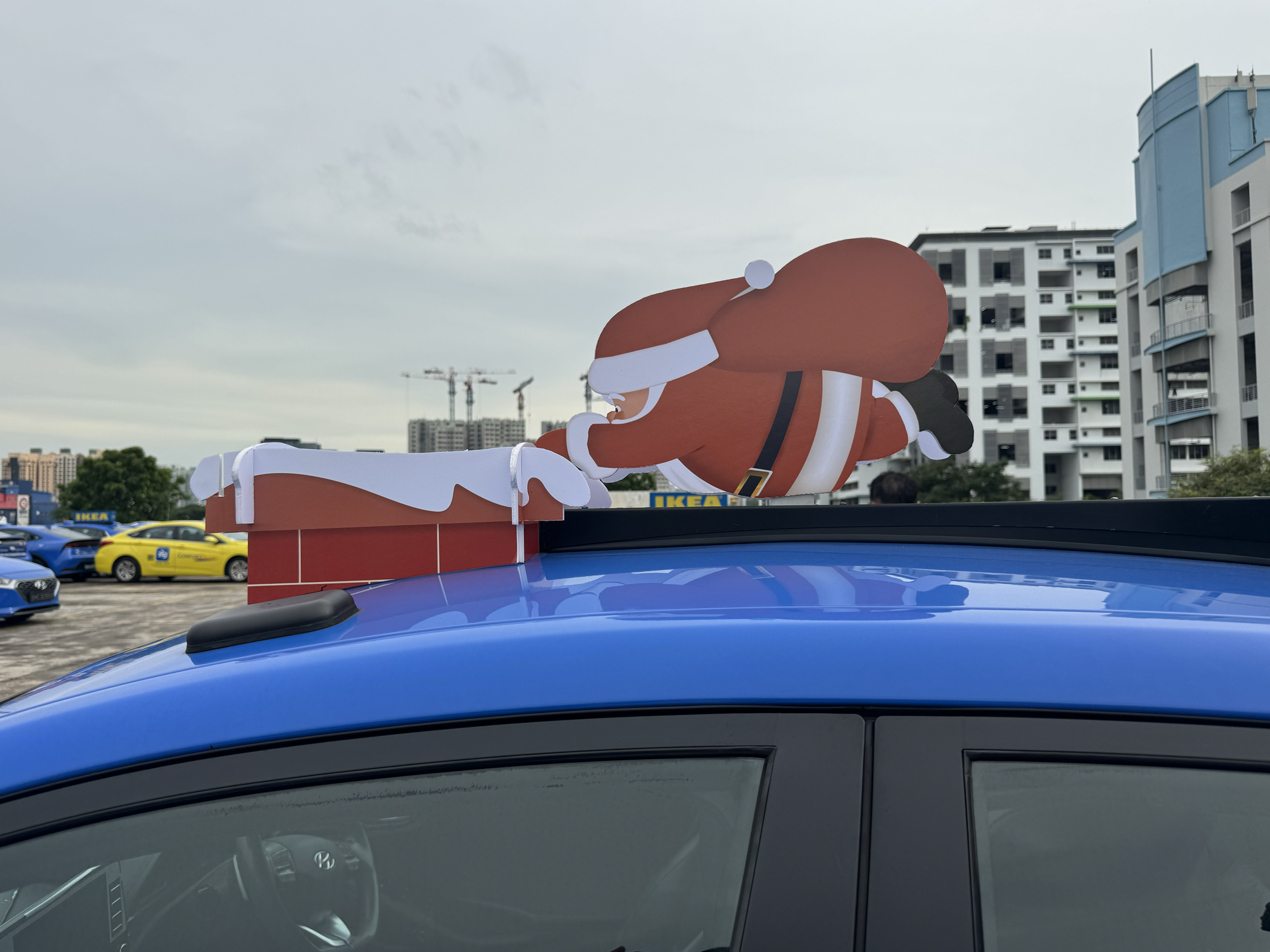
Concept 01 — Barely Holding On
This pose created the strongest illusion of motion. As the taxi moved across the city, it would appear as though Santa was struggling to hold on while flying through Singapore’s streets.
To reinforce the narrative, Santa’s facial expression was designed to look surprised and slightly panicked — amplifying the humour and lightheartedness of the moment.
Concept 02 — Midway Through Delivering Gifts
The second pose portrayed Santa dragging his bag of presents toward the chimney, suggesting he was in the middle of delivering gifts before being interrupted mid-action. This version leaned more toward warmth and festive charm, creating a gentler storytelling moment.
Concept 03 — Anchoring Himself with a Rope
The third pose explored a more exaggerated sense of movement, where Santa loops a rope around the chimney as an anchor point while trying to pull himself closer. This created a stronger sense of tension and motion, almost resembling an action scene unfolding on top of the taxi roof.
Completing the Illusion
The storytelling extendedbeyond the Santa figure itself. Since the taxi roof light acted as the “chimney,” I wanted the entire rooftop to feel cohesive rather than looking like separate decorative pieces placed together. To complete the illusion, the roof was wrapped with snow-covered rooftop graphics and brick textures, transforming the taxi into a miniature moving rooftop scene.. This helped reinforce the fantasy that Santa was actively travelling from rooftop to rooftop across Singapore.
Structural Challenges & Design Tradeoffs
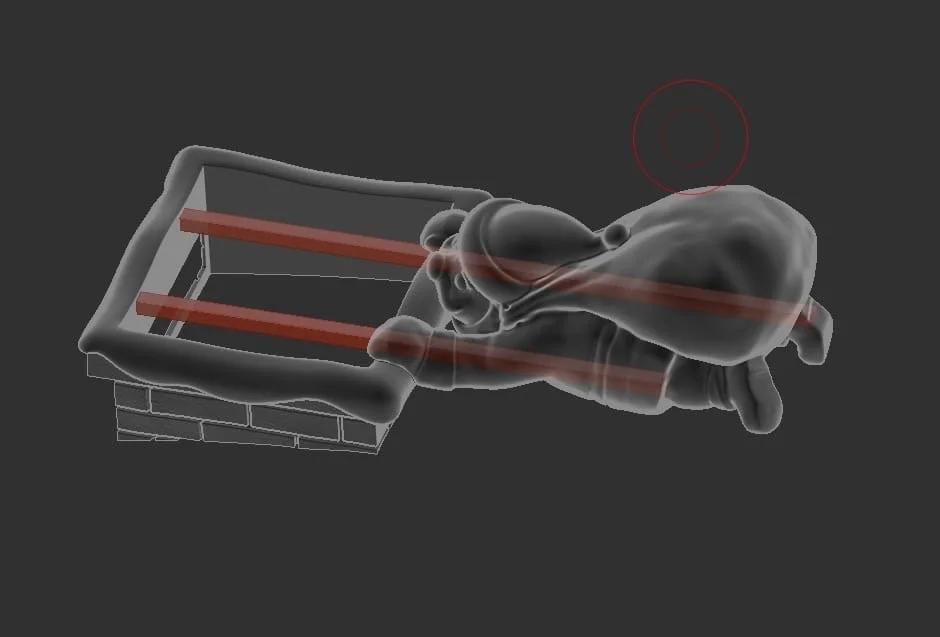
One of the earliest concerns was how to stabilise the 3D structure securely on the taxi roof. Initial solutions involved using visible bicycle racks, bolts, nuts, and external stabilising structures to hold the Santa in place. While technically functional, these elements disrupted the illusion and immediately made the installation feel mechanical rather than magical. The challenge became:
How might we keep the structure safe and durable while concealing the engineering behind it?
Eventually, we refined the concept to focus on a single pose and worked closely with operations and the model vendor to hide the supporting metal poles within the structure itself, allowing the Santa and chimney to appear visually seamless while remaining stable during movement.
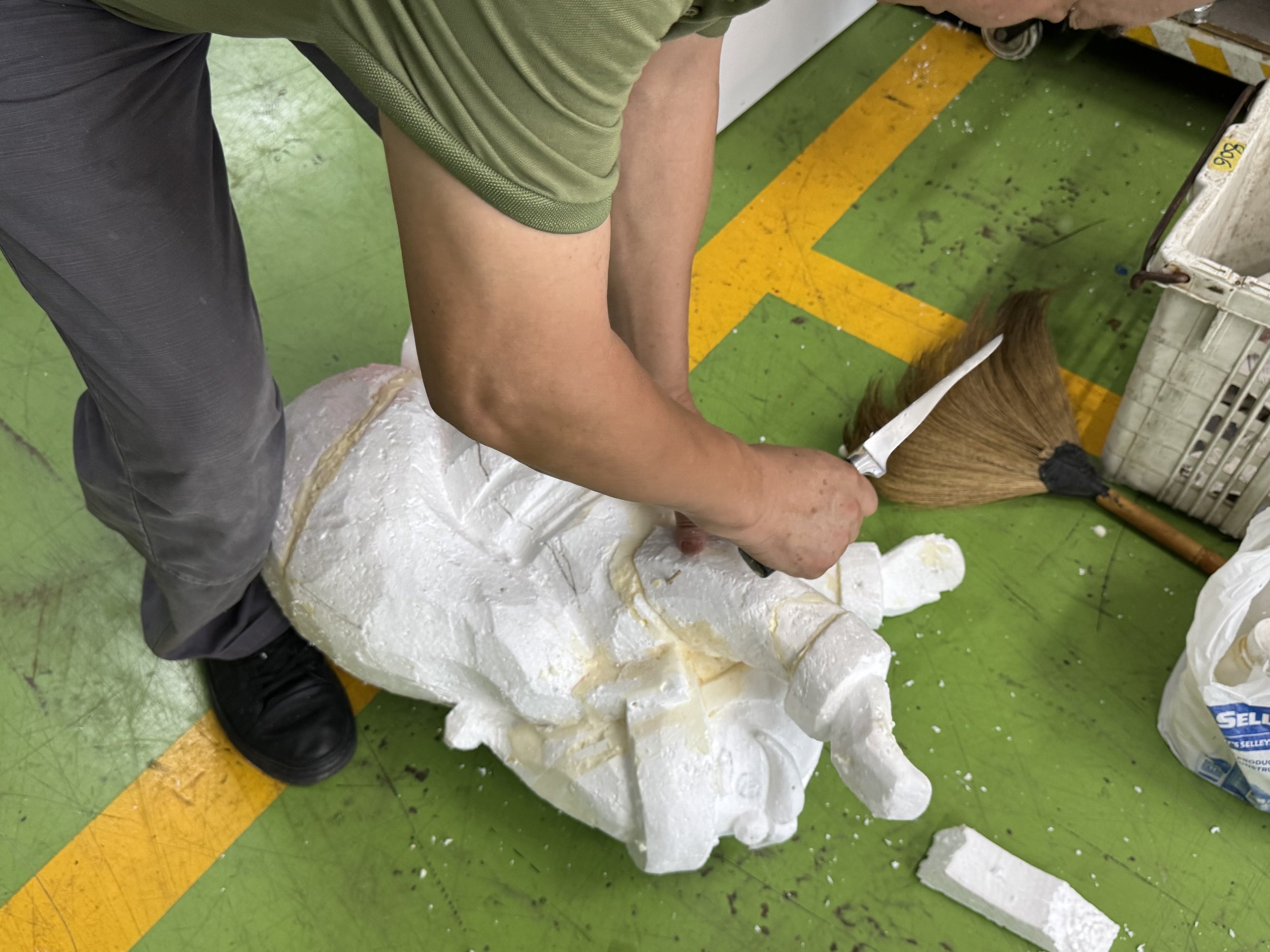
Foam Prototyping & Real-World Testing
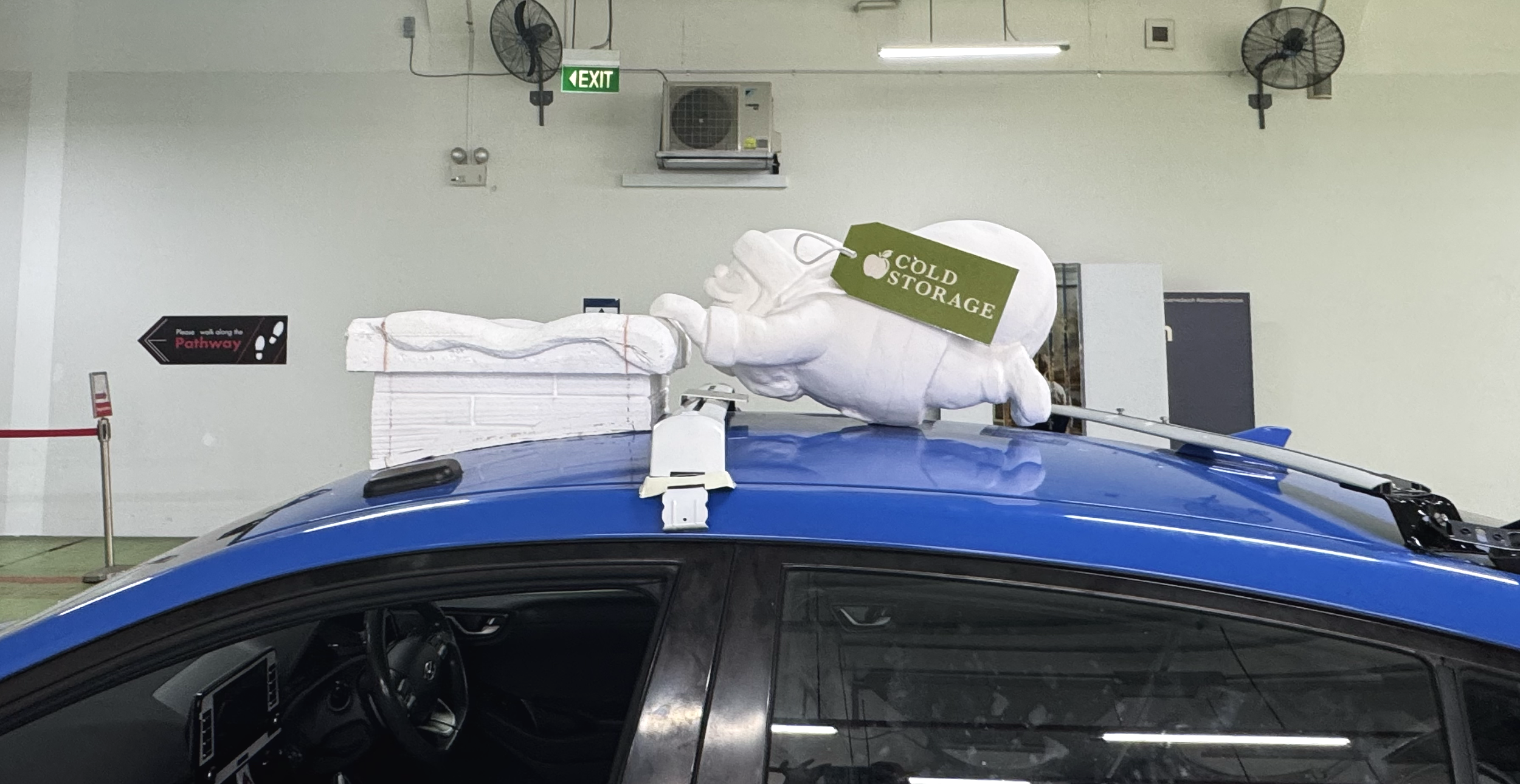
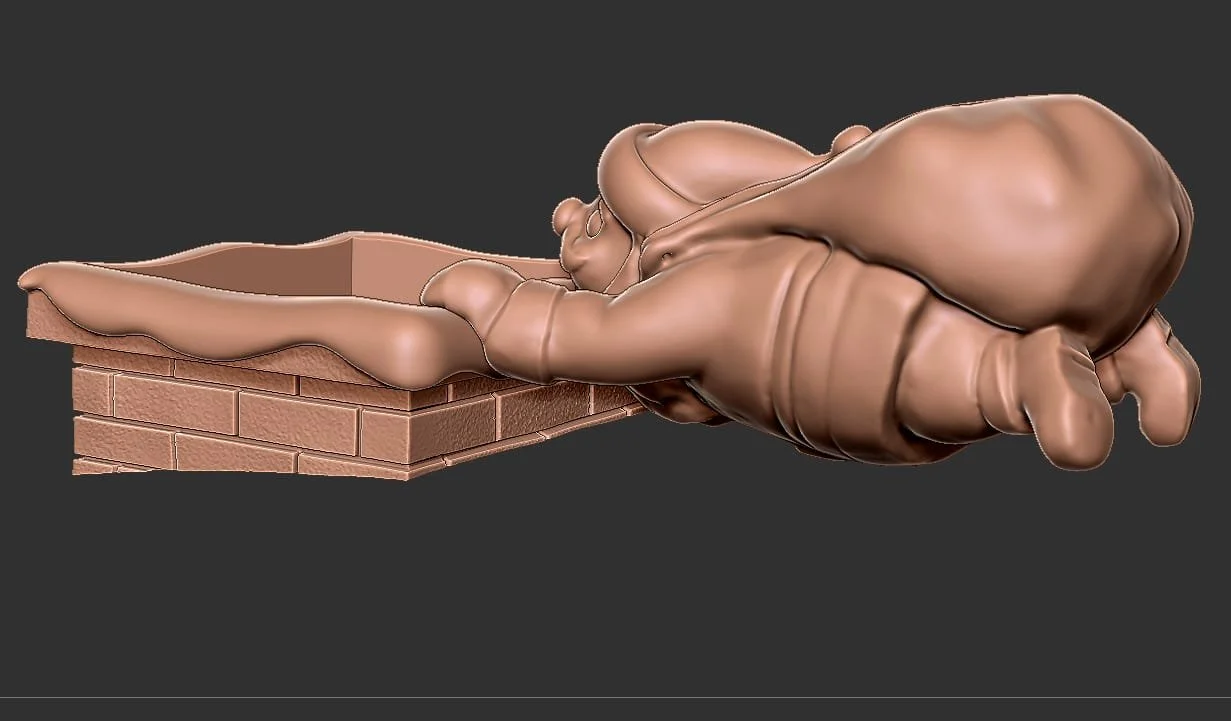
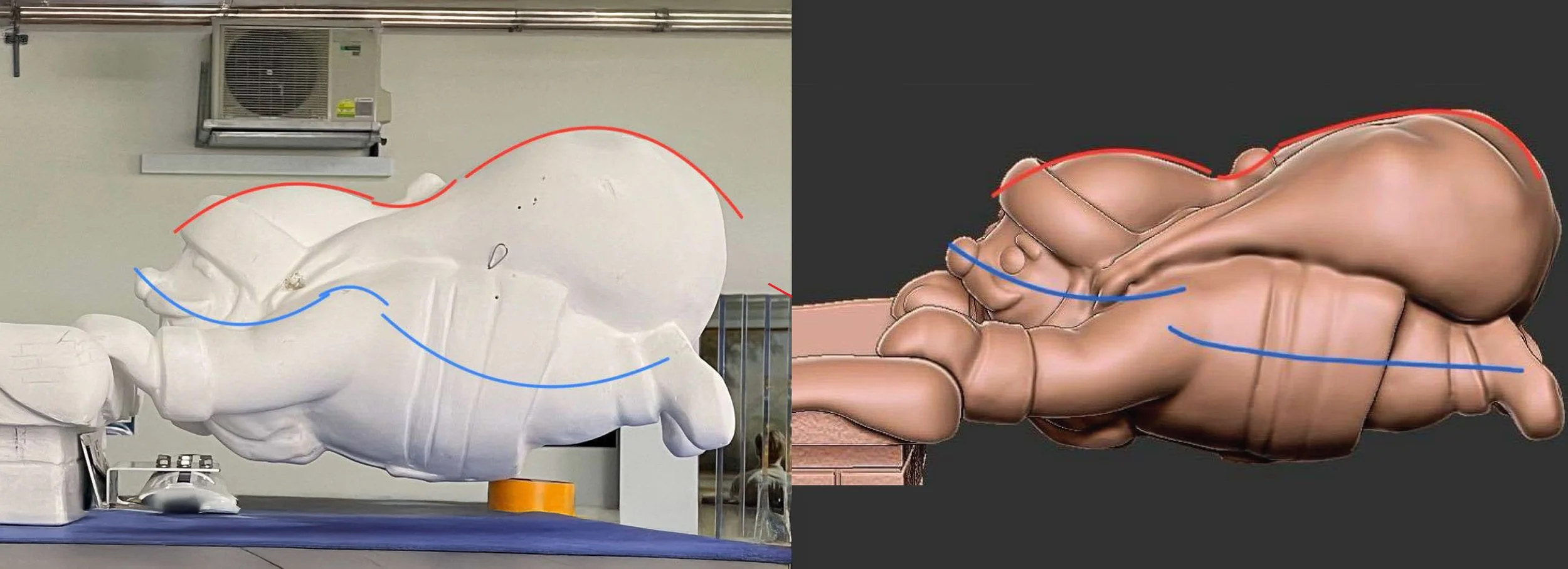
Before fabrication, foam prototypes were created and mounted directly onto actual taxi roofs for scale testing and on-site adjustments. This stage was critical because proportions that looked correct in digital renders behaved very differently in physical space. One major focus was the silhouette and “roundness” of Santa.
I intentionally wanted Santa to feel:
Slightly stubby
Rounded
Soft
Clumsy in an endearing way
This shape language helped reinforce the playful and comedic tone of the story. Even small details mattered. For example, Santa’s head angle was adjusted several times to ensure it looked like he was genuinely “flying” rather than lying flat on the roof. The chimney height was also refined carefully so that it framed Santa without blocking his expression from pedestrian eye level.
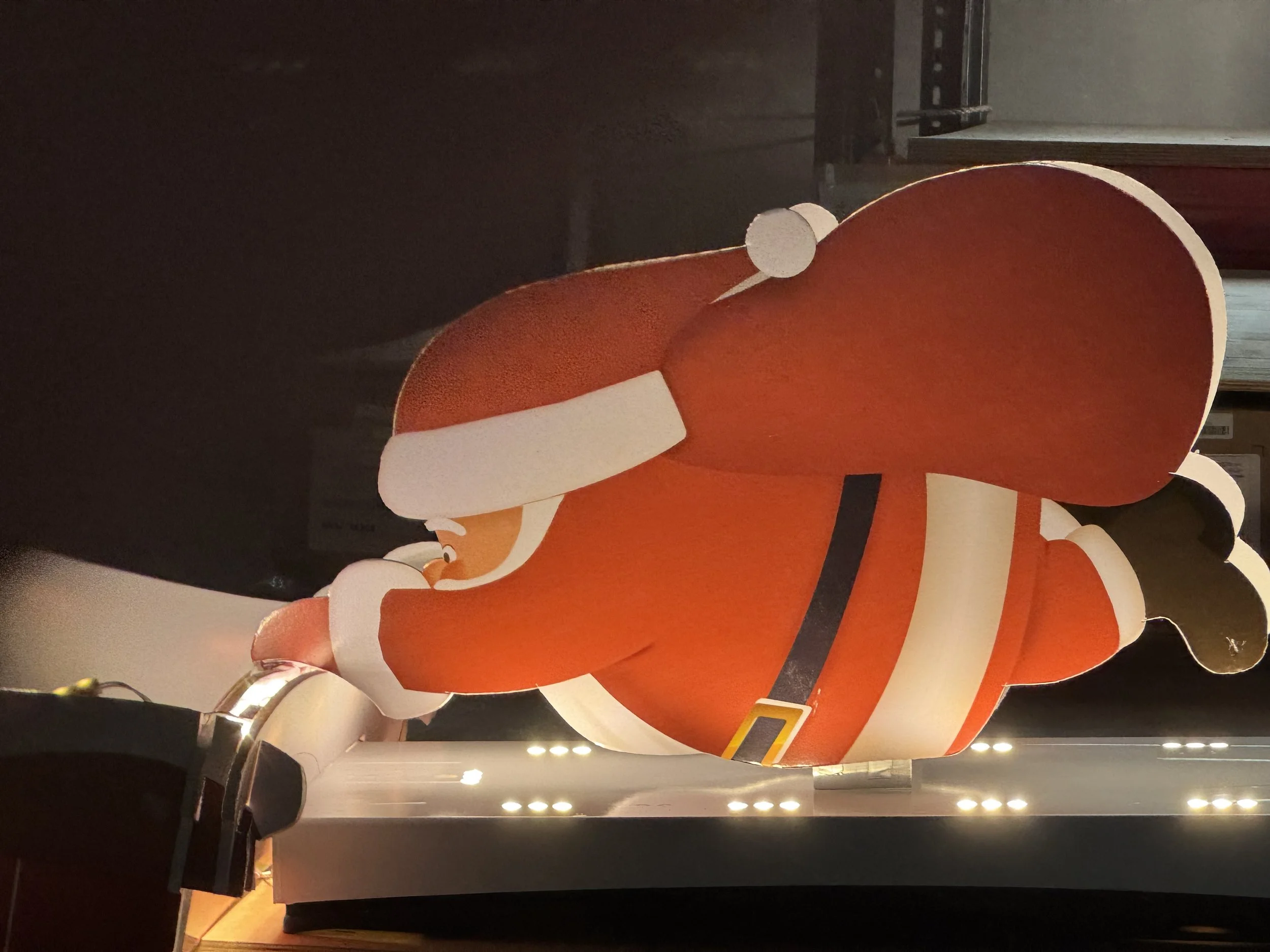
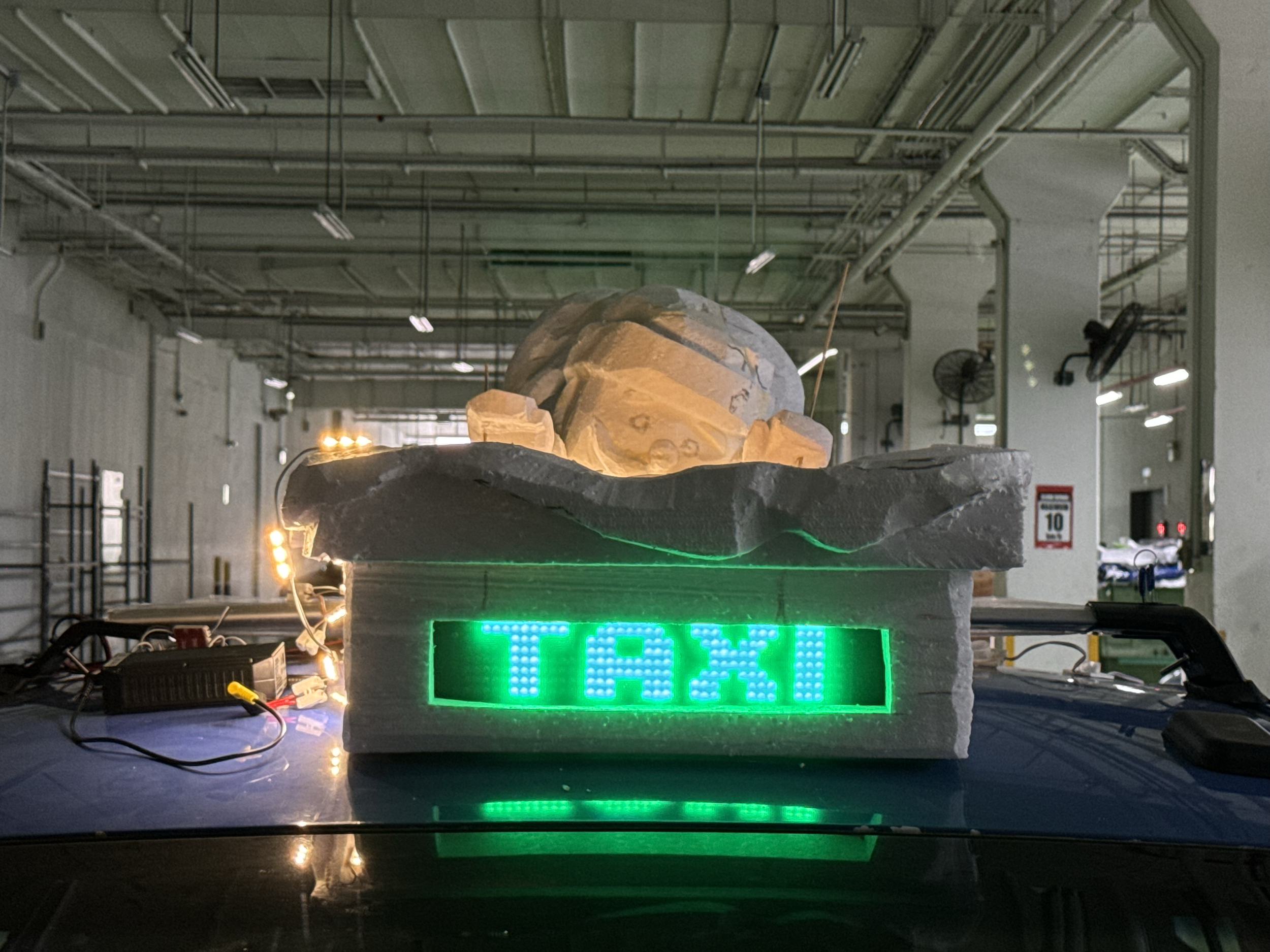
Lighting & Visibility Testing
Because the installation would primarily operate during evening hours, lighting became another key consideration.
We conducted multiple tests to determine:
The appropriate brightness levels
Visibility from a distance
How lighting interacted with the Santa silhouette
Whether the installation remained visually clear while the taxi was moving
The goal was to enhance visibility without overpowering the storytelling or making the structure feel overly commercial.
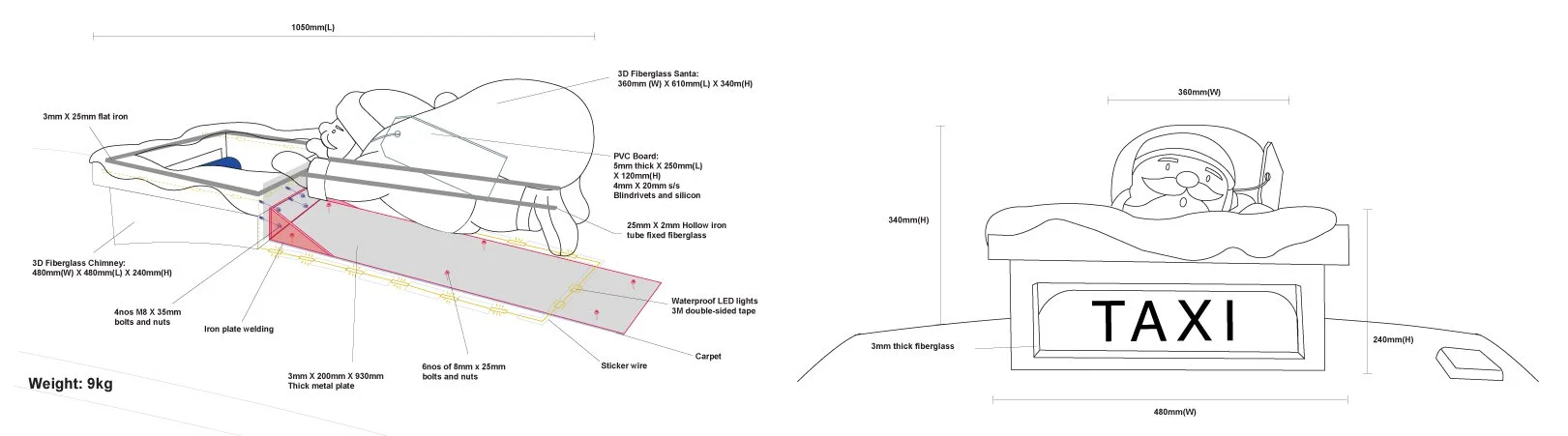
Engineering Drawings & Approval Process
Once the design and proportions were finalised, the next stage involved producing PE drawings for engineering and regulatory approval. This process involved several rounds of back-and-forth discussions with engineers to reinforce the structural durability of the installation under moving wind conditions and prolonged outdoor use. The challenge was not only designing something visually engaging, but ensuring it could safely function as a moving installation within real urban conditions.
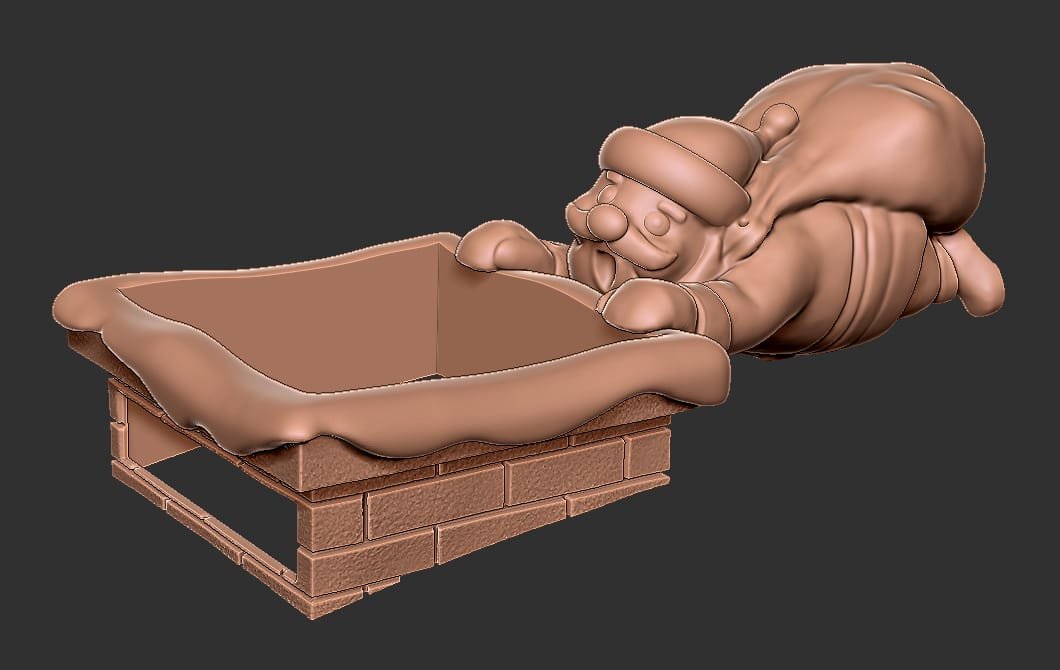
Translating the Concept into Final 3D Form
After approvals were aligned, the project moved into final 3D production. I worked closely with the 3D artist, operation and fabrication team to ensure the final model stayed true to the original storytelling intent and proportions established during prototyping. This included refining Santa’s facial expression, Curvature and body volume, Material detailing and Structural integration points.
At this stage, maintaining consistency between concept, prototype, and final fabrication became especially important to preserve the emotional quality of the character. Simultaneously, close coordination was needed across teams to ensure fabrication timelines, taxi wrapping production, lighting integration, and installation schedules remained aligned.
Final Installation & Bringing the Story to the Streets
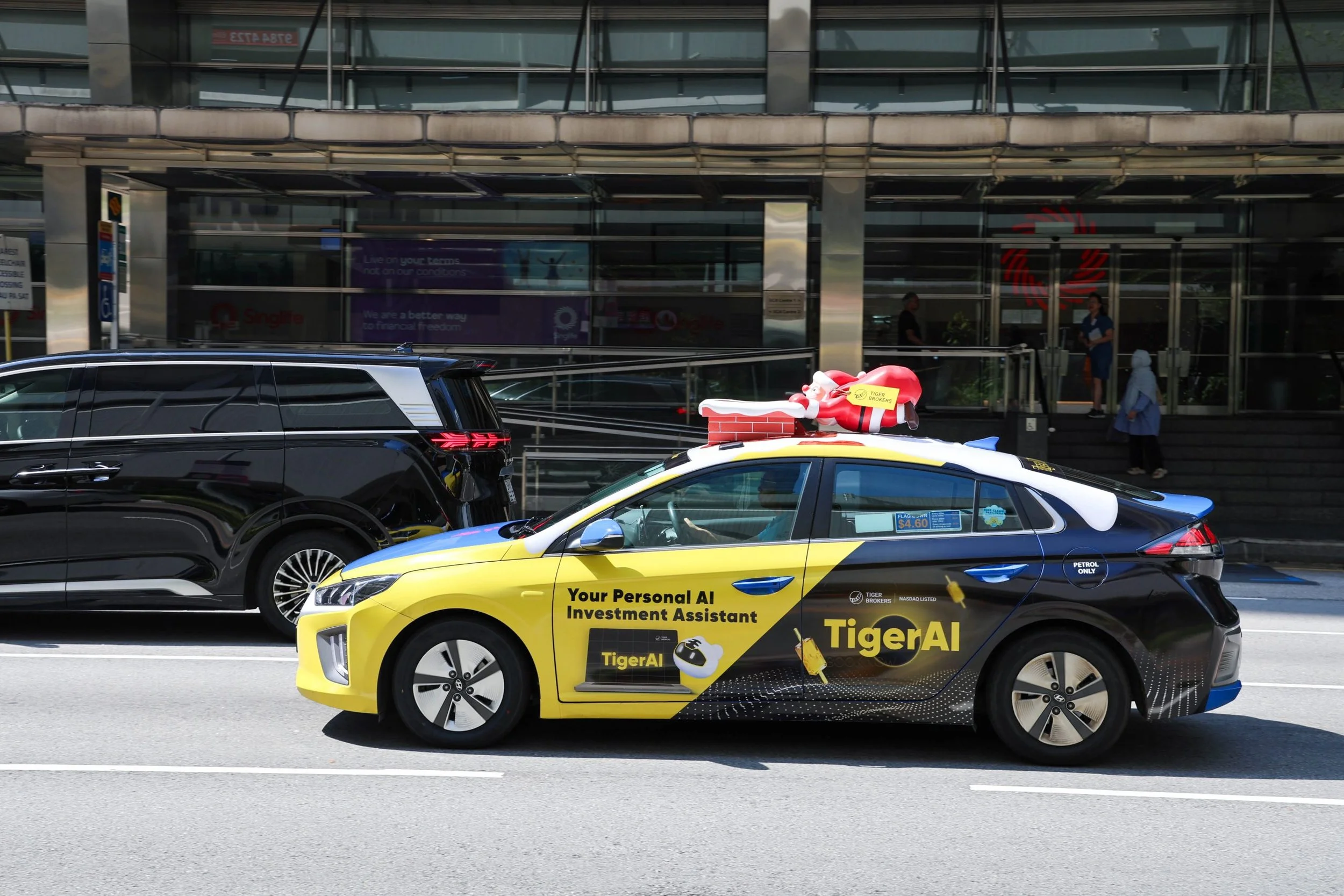
The final stage involved mounting the completed 3D structure onto the taxi alongside the fully wrapped rooftop graphics and integrated lighting system, focused on aligning every touchpoint:
Santa positioning
Lighting placement
Taxi wrap integration
Overall viewing experience from different street angles
Once completed, the installation was presented to the LTA for final structural and visual review.
Rather than simply advertising a campaign, the project aimed to create a moment of surprise, humour, and delight within the city’s daily commute.
THE RULES DIDN’T LIMIT US. THEY SHARPENED US.
LTA regulations imposed hard constraints on everything mounted to a taxi: weight limits, height clearances, structural integrity at road speed, and a strict prohibition on anything that could be mistaken for emergency lighting. This project required close collaboration with operations, production, and 3D fabrication teams.
In a lesser process, these constraints kill the idea. Here, we refined it. Working with the operations team through multiple rounds of physical fitting, from measuring, aligning, to several rounds of mounting and testing between the graphic wrap and the 3D onto the actual vehicle.
Each round surfaced new constraints: the structure had to be lightweight but stable, expressive but not oversized, eye-catching but still compliant. We worked through concerns around mounting points, lighting, roof clearance, weather resistance, and how the installation would hold up during daily taxi operations.
The final execution was the result of balancing creative ambition with operational reality.
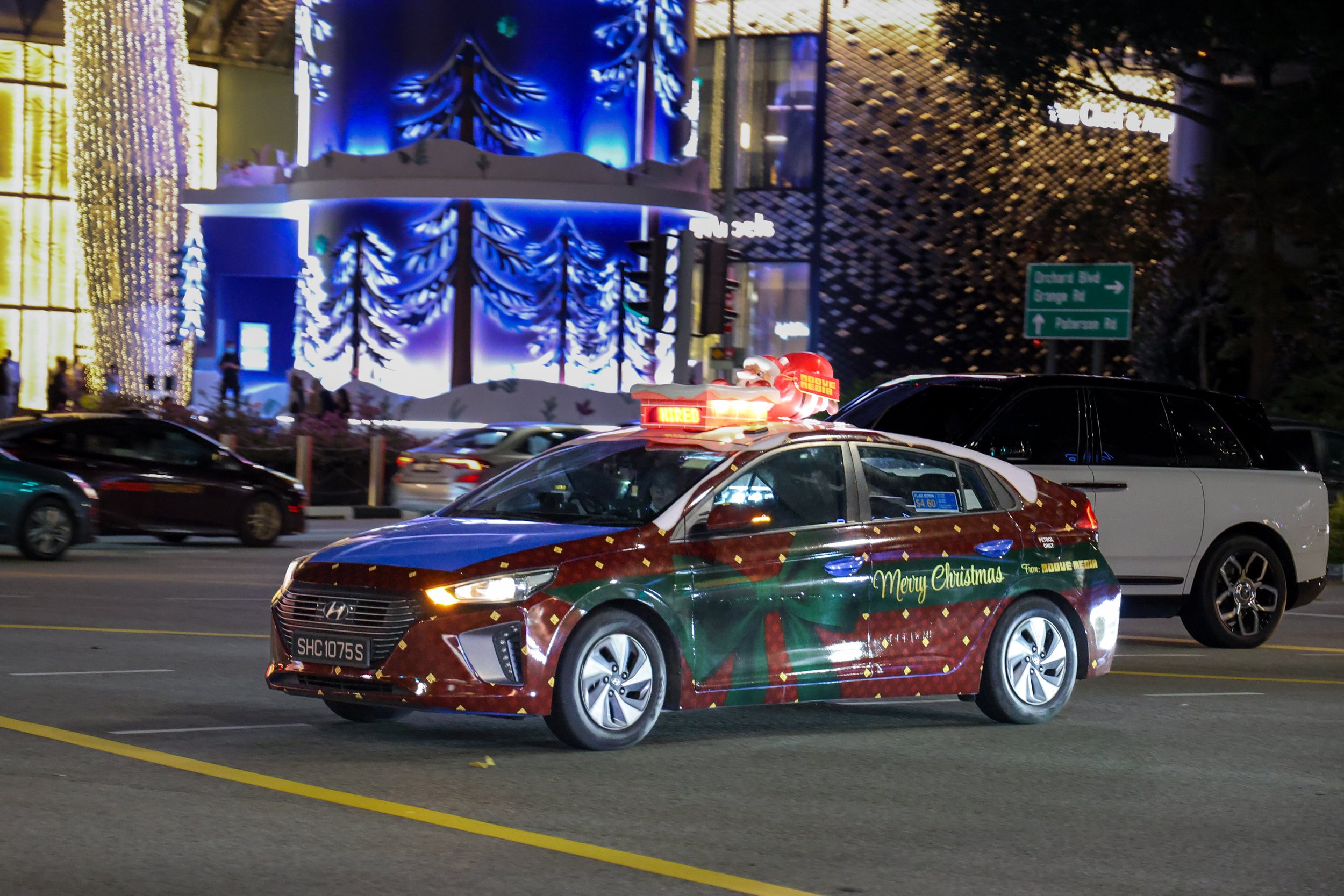
When design meets the real world . A city moment.
The completed executions ran across Singapore's taxi fleet — TigerAI's bold yellow-black financial branding and Moove Media's rich Christmas livery, turning everyday commuter journeys into festive, high-impact brand encounters. The campaign generated organic social sharing and street-level delight far beyond its paid reach. Pedestrians stopped. People photographed. The city noticed.
That's the signal that a creative idea has crossed from "advertising" into "experience." The campaign wasn't competing for attention in a feed. It was already in the world, moving through it, arriving at people who weren't expecting it and couldn't ignore it.
The Santa Claus Rally — a concept that most people had never heard of, became something they could see, feel, and share.